


Live‑Fish Transportation & Holding‑Pond Aeration: Choosing the Right SHANGU Tri‑Lobe Roots Blower

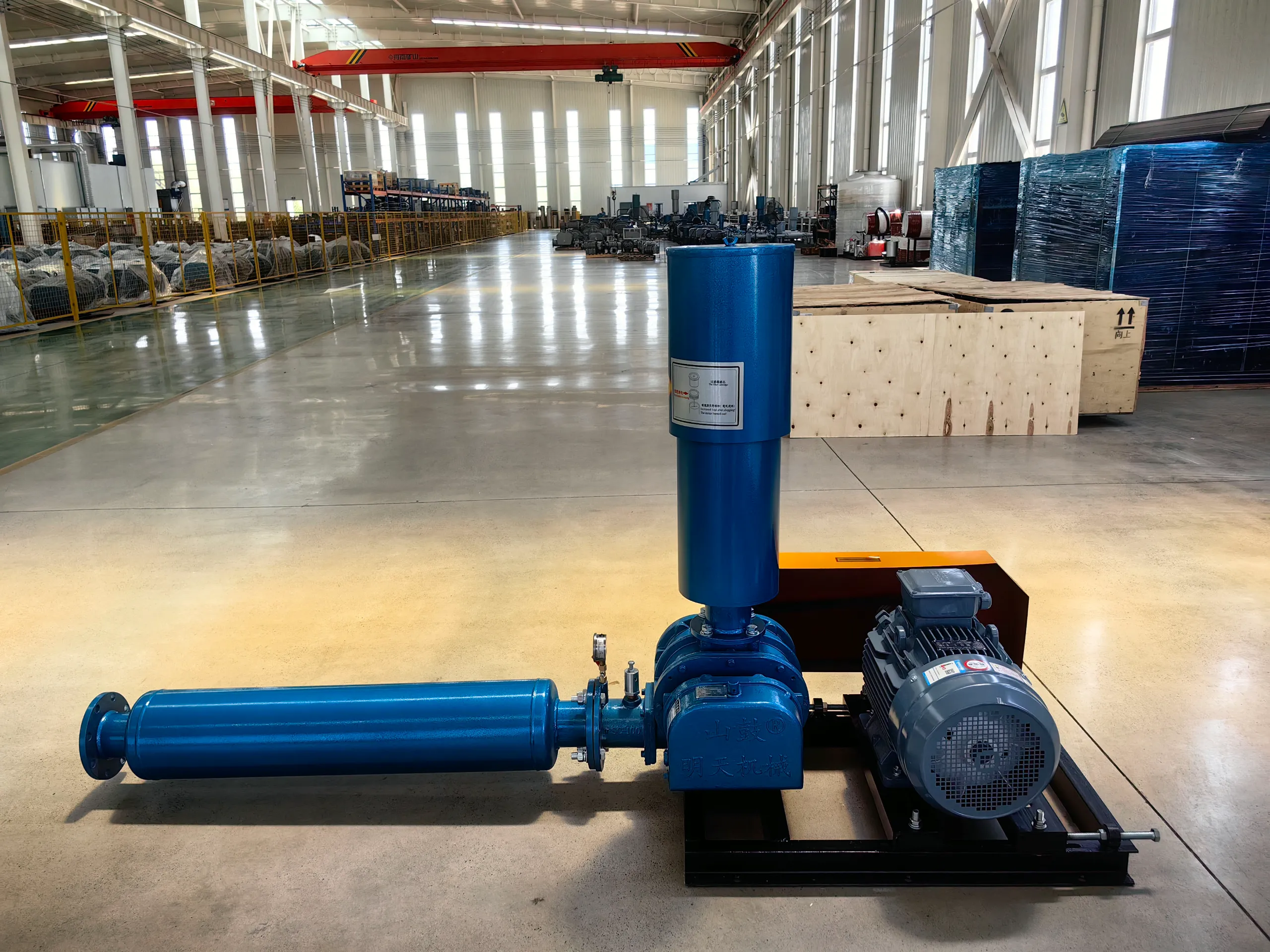
SHANGU® Roots Blower for Live‑Fish Transportation & Holding‑Pond Aquaculture Aeration | MingTian Machinery Complete Solution
Product Overview
Live‑fish tank‑truck long‑distance transportation and factory‑style temporary holding ponds face prominent risks of insufficient dissolved oxygen and rapid ammonia‑nitrogen accumulation. Poor aeration easily causes fish stress response and massive mortality, resulting in heavy economic losses. Stable aeration with clean oil‑free compressed air is the core guarantee for live‑fish survival. As positive‑displacement air‑source equipment, tri‑lobe Roots blowers deliver steady oil‑free airflow. Matched with nano‑microporous aeration tubes or aeration discs, they raise dissolved‑oxygen level in water bodies, restrain accumulation of ammonia‑nitrogen and nitrite, and reduce mortality during live‑fish transit and temporary rearing. They are widely adopted in aquatic‑product circulation plants, fishery terminals and live‑fish transfer workshops. Made‑in‑China adopting US‑Japan reference‑grade technology.
Manufacturing standards, salt‑fog & moisture resistance, blower performance matching and continuous‑running reliability directly determine aeration effect for live‑fish tank trucks and holding ponds. Shandong Mingtian Machinery Group under brand SHANGU is a national‑level Specialized, Refined, Differential & Innovative “Little‑Giant” enterprise. Supported by full‑series tri‑lobe Roots blower portfolio complying with Chinese mechanical industry standards, we serve domestic fishery projects and overseas aquaculture‑equipment exporters. We provide integrated solutions including blower selection, full‑accessory packages and special working‑condition calculation for live‑fish long‑haul transportation and high‑density holding‑pond projects.
Applicable Product Standards
- JB/T 8941.1‑2014: General‑purpose Roots blowers — Part 1: Technical specifications (Current valid). Specifies overall material requirements, vibration limits and intake‑medium requirements: maximum intake temperature ≤45 °C; solid‑particle content of intake air ≤100 mg/m³. Live‑fish aeration sites are mostly coastal fishery workshops with high humidity and salt‑fog vapour. Intake‑filtration protection shall be adopted to mitigate salt‑fog erosion on impellers and bearings.
- JB/T 8941.2‑2014: General‑purpose Roots blowers — Part 2: Performance test methods (Current valid). Defines factory‑test benchmark for airflow, pressure and shaft‑power verification. All catalogue performance data of MingTian are obtained under standard intake conditions: 20 °C, absolute pressure 101.325 kPa, relative humidity 65 %. Marked Qs in datasheets refers to inlet flow under this reference condition.
- GB/T 2888‑2008: Methods of noise measurement for fans and Roots blowers. Official noise‑measurement standard. Holding‑pond workshops and fishery terminals are often adjacent to residential zones; noise output shall meet this standard to avoid public complaints.
- GB 28381‑2012: Limited values of energy efficiency and energy‑efficiency grades for blowers. Mandatory energy‑efficiency regulation. Holding‑pond aeration usually requires 24‑hour non‑stop running; energy‑efficiency directly determines long‑term operational electricity cost.
Important note on international‑standard equivalence
The test procedure of JB/T 8941.2‑2014 refers to ISO 1217 positive‑displacement compressors acceptance‑test standard, but is NOT fully equivalent. Domestic Chinese test reports cannot directly replace ISO 1217‑compliant reports for overseas projects. For exported aquaculture projects, performance recalculation shall be conducted according to local altitude and coastal salt‑fog ambient conditions. Do not directly apply catalogue Qs parameters.
Critical Unit Conversion (For domestic fishery & overseas export projects, built‑in our product catalogue)
Definition: Qs = catalogue‑listed inlet flow (m³/min) under standard intake state. Overseas aquaculture buyers commonly use CFM for flow; pressure units include kPa, kgf/cm², PSI and mmHg.
- Flow conversion: 1 m³/min = 35.314 CFM
- Pressure conversion: 9.8 kPa = 0.1 kgf/cm² = 73.5 mmHg = 1.422 PSI
- Flow conversion from reference‑state (0 °C) to standard‑intake‑state (20 °C): Qs = Qn × 1.0732
✨ Practical industry pitfalls (rarely published online)
- Tank‑truck selection misunderstanding: Many purchasers select blower capacity merely based on tank volume while ignoring pipeline elbows and fouling resistance of microporous aeration tubes. 10‑15 % safety margin for airflow & pressure must be reserved. When aeration holes get clogged in service, insufficient pressure will lead to sharp dissolved‑oxygen drop and heavy live‑fish mortality.
- Coastal salt‑fog hazard: Fishery terminals and coastal transfer sites contain salt‑laden vapour. Salt‑fog sucked into blower chamber accelerates impeller rusting and bearing wear. Apart from nameplate parameters, enhanced intake filtration and optional anti‑corrosion coating are strongly recommended.
- Shock risk for mobile tank‑truck system: Bumpy driving causes pipeline pressure fluctuation. Hard start‑stop is forbidden. Check valves, blow‑off / relief valves are mandatory. Most blower failures for live‑fish trucks result from water backflow at shutdown instead of main‑unit quality defects.
- More airflow does not equal better aeration: Excessive airflow triggers fierce water turbulence, causes fish‑body abrasion and stress injury and increases mortality. Variable‑frequency drive is preferred to adjust aeration volume dynamically according to fish‑loading density.
- Airflow attenuation at high altitude: For high‑altitude live‑fish transfer stations, lower atmospheric pressure reduces actual blower output. Working‑condition recalculation is required; plain‑land catalogue parameters cannot be directly adopted, otherwise dissolved‑oxygen shortage occurs.
Working‑condition Challenges & Customer Key Concerns for Live‑Fish Transportation & Holding Ponds
Typical scenarios include aeration for live‑fish tank trucks, fishery‑terminal temporary holding ponds, factory‑style recirculating aquaculture workshops, high‑density fish‑shrimp‑crab rearing tanks. Beyond purchase price, buyers attach high importance to the practical requirements listed below:
- Stable & oil‑free air supply: Deliver oil‑free clean air to prevent water contamination; capable of 24‑hour continuous‑duty operation. High‑precision dynamic balancing for impellers, unit vibration complies with JB/T 8941.1‑2014 limits.
- Salt‑fog & high‑humidity resistance: Cope with high‑humidity salt‑laden air at coastal sites; reliable intake‑filtration solution; custom anti‑corrosion coating option available.
- Sufficient performance margin: Compensate pipeline loss and progressive aerator fouling; reserve 10‑15 % airflow‑pressure safety margin for stable dissolved‑oxygen level.
- Noise control: Complete silencer packages for terminals and workshops near residential communities.
- Adjustable aeration capacity: Variable‑frequency compatible; dynamically adjust aeration output with fish‑stocking density and seasonal water‑temperature change to avoid fish stress damage.
- Complete accessory packages: Air filter, inlet & outlet silencers, safety valves, check valves, blow‑off valves, flexible expansion joints, PLC control cabinet, reduce extra component‑integration work for customers.
- Low‑cost maintenance: Universal spare‑parts with short‑delivery lead‑time for convenient on‑site fishery‑site servicing.
- Custom‑building capability: Lightweight compact models for vehicle‑mount installation, heavy‑duty units for large‑scale holding ponds; salt‑resistant anti‑corrosion coating, special‑voltage motor options.
- Export‑oriented requirements: Imperial‑unit datasheets (CFM / PSI), English catalogues, special‑voltage motors, performance recalculation complying with ISO working‑condition requirements for global aquaculture EPC suppliers.
Mingtian SHANGU Model Matching for Live‑fish Transportation & Holding‑pond Aeration
SHANGU product portfolio includes MTS, RSR, MTRV vacuum pumps, MTRF / MTRG heavy‑duty Roots blowers. Performance range: flow 0.6‑1057 m³/min, pressure rise 9.8‑196 kPa. Our product series cover compact units for small live‑fish tank‑trucks, medium‑sized temporary ponds up to large‑scale fishery‑hub rearing workshops.
| Series | Working Pressure | Flow Range | Typical Aquaculture Application for Livefish Transport & Holding Ponds |
|---|---|---|---|
| MTS 3‑lobed Roots Blower (Belt‑drive) | 9.8‑98 kPa positive pressure | 1.1‑60 m³/min | Workhorse model for live‑fish tank‑trucks & small holding ponds. Compact footprint, well‑suited for vehicle‑mount installation; small‑scale temporary holding ponds at fishery terminals. Optional intelligent VFD control cabinet for intermittent or 24h aeration. Ideal for medium‑small live‑fish transfer projects. |
| RSR 3‑lobed Roots Blower (Belt‑drive / Direct‑coupling) | 9.8‑98 kPa positive pressure | 0.6‑184 m³/min | Factory‑style holding‑pond workshops, medium‑size high‑density fish‑shrimp rearing tanks; multi‑pond parallel aeration at fishery terminals. High spare‑part compatibility, full‑set silencer & safety piping accessories available. Designed for long‑time continuous‑duty operation. |
| MTRV Roots Vacuum Pump (Negative‑pressure series) | ‑9.8 ~ ‑49 kPa negative pressure | 1‑420 m³/min | Auxiliary vacuum sludge removal for holding ponds, negative‑pressure suction for recirculating water‑treatment systems, vacuum‑assisted live‑fish sorting workshops. Must be equipped with high‑efficiency intake filter to block moisture and impurities. |
| MTRF / MTRG Heavy‑duty Roots Blower | 9.8‑147 kPa positive pressure | 40‑1057 m³/min | Large‑scale fishery hubs, clustered large‑volume holding‑pond groups for high‑density live‑fish rearing. Water‑cooled construction for heavy‑duty long‑time high‑pressure running. Custom salt‑fog anti‑corrosion coating for coastal high‑salinity terminals. |
Model‑selection tips
- For live‑fish tank‑trucks and small‑size holding ponds (tens to hundreds cubic‑metre water volume): Prioritize compact MTS series. It is well‑suited for vehicle‑mount installation.
- For factory‑style holding‑pond workshops and medium‑sized fishery‑terminal ponds: Adopt RSR series. Equip check valves and blow‑off valves; VFD configuration is recommended if budget permits.
- For large clustered holding‑ponds, long‑distance piping and coastal salt‑fog sites: Choose MTRF / MTRG heavy‑duty models. Calculate full‑set pipeline plus aerator resistance and reserve sufficient airflow‑pressure margin, upgrade anti‑corrosion treatment.
- For coastal salt‑fog sites: Upgrade anti‑corrosion coating and high‑capacity intake filter; install full‑set inlet‑outlet silencer packages if adjacent to residential zones.
- For fluctuating fish‑stocking density: Deploy VFD control cabinet to adjust aeration output dynamically and minimise fish stress injury.
Core Advantages of MingTian SHANGU Products
- Strong R&D & Manufacturing Capacity: National‑level High‑tech Enterprise & Specialized‑Refined‑Differentiated‑Innovative Little‑Giant Enterprise. Technical team includes professor‑level senior engineers, PHD and master‑degree specialists. Equipped with 5‑axis machining centers and high‑speed dynamic‑balancing test benches. Every impeller undergoes high‑precision dynamic balancing. Unit‑vibration performance exceeds the limit value specified in JB/T 8941.1‑2014, suitable for long‑term continuous‑running aquaculture scenarios. Main housing material adopts HT250 high‑strength cast iron; optional anti‑corrosion coating for salt‑fog coastal fishery environment.
- Credible Performance Data: Each unit passes factory performance test complying with JB/T 8941.2‑2014. We deliver professional flow‑pressure correction for coastal salt‑fog sites, high‑altitude locations and overseas orders, eliminate wrong‑model‑selection risks and prevent dissolved‑oxygen shortage for live‑fish transport and holding‑pond systems.
- Flexible Configuration & Complete Delivery: Belt‑drive or direct‑coupling options. Available accessories: inlet / outlet silencers, air filters, safety valves, check valves, blow‑off valves, flexible expansion joints, PLC intelligent control cabinets (VFD, no‑load startup & overload protection). Custom base dimension support for vehicle‑mount setup and retrofitting of legacy holding‑pond aeration equipment.
- Dual support for domestic fishery & export EPC orders: Chinese / English catalogues, dual‑set datasheets in m³/min & CFM. Custom special‑voltage motors are offered for global aquaculture‑equipment OEM & EPC contractors.
- Professional Technical Service & Spare‑part Support: In‑house spare‑parts warehouse for fast lead‑time. Send us your project parameters: number of tank‑trucks / total water volume of holding ponds, water depth, fish‑stocking density, pipeline length, elbow quantity, coastal salt‑fog condition, site altitude. We will deliver custom‑tailored blower proposal for you.
Inquiry — Recommended project‑information for model‑selection submission
Aeration purpose (live‑fish tank‑truck transport / holding pond), total water volume, water depth, fish‑stocking density, total pipeline length, elbow quantity, coastal salt‑fog condition, site altitude, VFD requirement, vehicle‑mount requirement. Accurate inputs help avoid risks such as insufficient dissolved‑oxygen, salt‑fog corrosion and fish‑stress‑caused mortality.
Contact Us
- 📞 Phone / WhatsApp: +86 187 6611 7068
- 📧 Email: [email protected] | [email protected]
- 🌐 Official Website: https://www.mtrootsblower.com
- 📞 WhatsApp / Wechat: +86 187 5316 3090
- 📧 Email: [email protected]