


🏭 Heavy‑duty SHANGU roots blowers for iron‑&‑steel metallurgy.

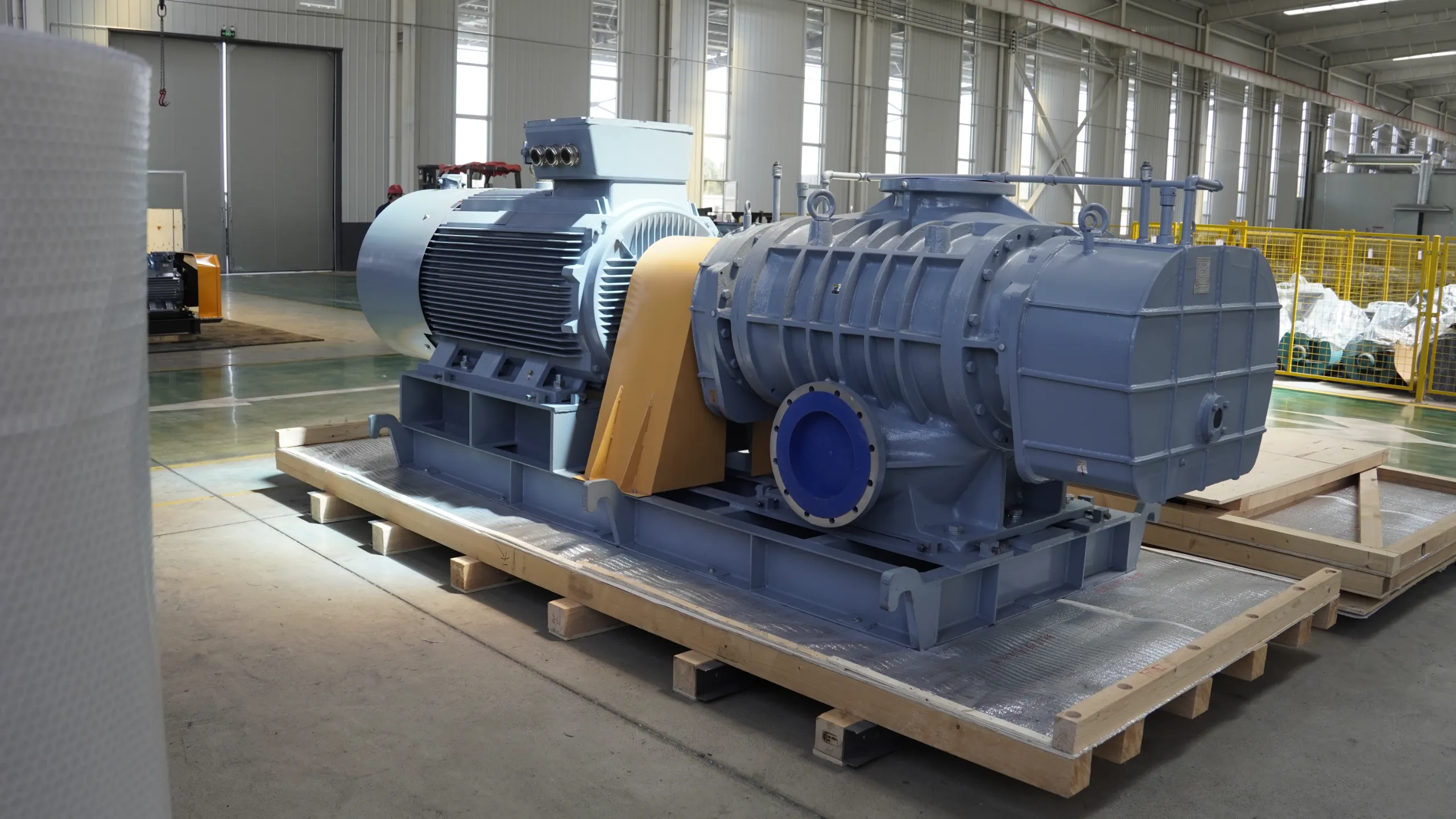
SHANGU® RSR / MTRF / MJSR / MTRG / MTRR / RSRV Series Roots Blowers for Iron & Steel Metallurgy Processes
Product Overview
Across the whole iron‑and‑steel metallurgy workflow, including ore sintering, blast‑furnace combustion support, converter steelmaking, coke‑oven gas recovery, coal‑powder injection, furnace purging and flue‑gas dedusting, reliable gas‑supply power equipment is indispensable. SHANGU® RSR, MTRF, MJSR, MTRG, MTRR, RSRV tri‑lobe roots blowers, developed by Shandong Mingtian Machinery Group, are purpose‑built for heavy‑duty steel‑mill conditions: high ambient temperature, heavy dust loads, partially flammable‑explosive media and 7 × 24‑hour non‑stop operation. Made‑in‑China adopting US‑Japan reference‑grade technology. As positive‑displacement blowers, they deliver stable volumetric airflow under pipeline‑resistance fluctuation and smelting‑load adjustment. Suitable for clean combustion‑support air, coke‑oven gas, blast‑furnace gas and process purging gas. Widely applied in iron‑making blast furnace, sintering plant, converter steelmaking, electric‑arc furnace, coal‑powder conveying, coal‑gas recovery and metallurgical dedusting‑purging service.
Rare Practical Field Tips (Seldom Published Online)
- All catalogue nominal performance data are under standard suction condition (20 °C, 101.3 kPa, RH 65 %) for clean air. Metallurgy projects feature high inlet temperature, variable site altitude; coal‑gas gas‑molecular‑weight differs greatly from air. Never select model directly by clean‑air catalogue values. Correction for gas molecular‑weight, inlet temperature and altitude must be completed. Add an 8‑12 % flow margin for every 1000 m elevation rise. Mass‑flow capacity drops sharply when inlet temperature exceeds 45 ℃.
- Critical pitfall for coal‑gas service: an explosion‑proof motor alone cannot achieve full‑unit intrinsic safety. Anti‑static rotor, labyrinth / mechanical seals, nitrogen‑purge interlock, pipeline flame‑arrestor and vent‑valve package shall be fully equipped. Static‑ignition risk still exists if only the motor is upgraded.
- Strictly distinguish Normal‑state flow Nm³/min (0 ℃ design baseline) versus working‑condition flow Qs m³/min (20 ℃ blower inlet). Most metallurgical design documents adopt normal‑state flow, while blower catalogues use working‑condition parameters. Incorrect conversion will cause insufficient gas supply and unstable furnace conditions. Conversion formula: Qs(20 ℃) = Qn(0 ℃) × 1.0732.
- Iron‑oxide dust prevails inside steel plants. Multi‑stage inlet pre‑filtration is required in addition to the blower’s built‑in filter. Otherwise dust invades the casing, abrades impellers and leads to obvious flow decay within 1‑2 service years.
- Avoid excessive safety margin. If flow‑pressure margin exceeds 30 %, the unit runs far from its high‑efficiency zone with more than 20 % extra power‑consumption. Reasonable process margin for metallurgical heavy‑duty service: 10‑15 %.
- Backflow risk for coal‑gas & high‑temperature flue‑gas service cannot be solved by check‑valve only. A bypass vent pipeline and nitrogen‑purge port shall be equipped to displace residual flammable medium during shutdown for safety protection.
Applicable Industry Standards
- JB/T 8941.1‑2014: Roots type blowers for general purpose — Part 1: Specification
- JB/T 8941.2‑2014: Roots type blowers for general purpose — Part 2: Performance test method
- JB/T 13233‑2017: Explosion‑proof roots blowers (Chinese industry standard for flammable‑gas service)
- GB 3836 series: Standard for explosive atmospheres, MOD (Modified Adoption) of IEC 60079, comparable with EU ATEX 2014/34/EU directive.
- HJ/T 251‑2006: Environmental‑protection product technical requirement for roots blowers.
- GB/T 2888‑2008: Method of noise measurement for fans and roots blowers.
- GB 28381‑2026: Minimum allowable values of energy‑efficiency and energy‑efficiency grades for blowers.
Standard Equivalence Note
- JB/T 8941.1‑2014 is MOD (Modified Adoption) of ISO 1217:2009 Displacement compressors — Acceptance tests, NOT identical adoption. Overseas ISO 1217 lab test‑reports serve only for reference. Domestic Chinese iron‑and‑steel‑metallurgy projects shall accept equipment complying with JB/T & JB/T 13233‑2017 & GB 3836 standards.
- GB 3836 ≈ IEC 60079 ≈ EU ATEX directive: equivalent but not fully identical. Separate ATEX certification is mandatory for EU export; domestic GB 3836 test‑reports cannot replace EU‑ATEX certificates.
Unit‑Conversion Reference (For tender & cross‑border comparison)
Pressure:
9.8 kPa = 0.1 kgf/cm² = 1000 mmH₂O = 1.422 psi
Flow:
1 m³/min = 60 m³/h = 35.71 CFM
Gas‑state conversion: Working‑condition suction‑state flow Qs(20 ℃) = Qn(0 ℃) × 1.0732
Important metallurgy remark: Clearly mark working‑condition / normal‑state flow, Gauge / Absolute pressure in inquiry documents. Provide gas molecular‑weight for coal‑gas medium; air‑based conversion formula cannot be directly applied.
Key Buyer Concerns (Explicit Requirements & Hidden Field Pain‑points)
✅ Explicit Requirements
- Working‑condition flow & pressure matching sinter / blast‑furnace / coal‑injection / coal‑gas pipeline total resistance to satisfy metallurgical gas‑supply requirement;
- Explosion‑proof rating matching hazardous‑zone classification (Ex d ⅡB T4 / Ex d ⅡC T4);
- Noise & vibration comply with steel‑plant site environmental limits;
- Capital‑investment budget and motor‑power requirement;
- DCS‑compatible, VFD‑ready for fluctuating smelting load.
✅ Hidden Pain‑points (Production‑loss risk outweighs equipment price gap)
- Dust‑abrasion risk: Heavy iron‑oxide dust exists in steel‑mill atmosphere. Insufficient pre‑filtration leads to progressive impeller abrasion and flow decay, resulting in unstable furnace performance.
- 24/7 heavy‑duty reliability: Iron‑and‑steel enterprises run non‑stop all‑year‑round. Units ≥ 60 kPa(gauge) shall adopt water‑cooling construction. Unexpected blower shutdown may cause blast‑furnace / sinter‑line production reduction or full‑line halt with huge economic loss.
- Full‑unit intrinsic‑safety for coal‑gas: Explosion‑proof motor is merely a single component. Anti‑static rotor, multi‑stage sealing, nitrogen‑purge and vent interlock shall be equipped as a complete set. Single‑part explosion‑proof ≠ full‑unit explosion‑proof.
- Selection error caused by mixing normal‑state / working‑condition parameters: Design institutes mostly provide Nm³/min normal‑state flow. Many projects skip temperature & molecular‑weight correction and suffer insufficient actual blower output, disturbing metallurgical production indexes.
- Total‑lifecycle‑cost thinking: Evaluate power consumption, special‑spare‑part cost and unplanned‑shutdown loss, not merely initial procurement price. Low‑cost simplified‑configuration units bring high hidden hazards.
- Customization & fast after‑sales response: Metallurgy is a high‑risk continuous‑production industry. Manufacturer shall provide pipeline‑resistance calculation, coal‑gas‑oriented selection advice, safety‑oriented installation briefing and fast spare‑part delivery to minimize production‑halt duration in case of breakdown.
Core Product Advantages | SHANGU® by Shandong Mingtian Machinery Group
Shandong Mingtian Machinery Group is national Hi‑Tech Enterprise and national‑level Specialized‑Sophisticated “Little‑Giant”. Made‑in‑China manufacturing adopting US‑Japan reference‑grade technology standards. Two industrial parks are equipped with 5‑axis machining centers, high‑speed dynamic‑balancing testers and three‑coordinate measuring instruments. The R&D team includes professor‑level senior engineers, PhD and master specialists with university‑industry‑research cooperation. SHANGU® is a well‑known trademark of Shandong Province.
- Constant‑volume anti‑back‑pressure performance: Tri‑lobe rotors pass G2.5‑grade high‑speed dynamic balancing. Stable airflow output under variable smelting‑load and pipeline‑resistance, guarantee steady sinter and blast‑furnace working conditions.
- Metallurgy‑oriented customized material solutions:
- Explosion‑proof package: Exd ⅡBT4 / Exd ⅡCT4 explosion‑proof motor, anti‑static rotor; reserved ports for flame‑arrestor, nitrogen‑purge displacement and vent interlock pipeline.
- Wear‑& corrosion‑resistant material options: High‑strength ductile iron for clean combustion air; nickel‑phosphorus coating for mild‑corrosion media; 304 / 316 L stainless‑steel rotor & casing for media containing H₂S.
- Sealing solution: Labyrinth / double‑end mechanical‑seal with isolating‑purge port to prevent dust & coal‑gas ingress into gearbox.
- Enhanced water‑cooling for high‑pressure duty: Units ≥ 60 kPa(gauge) equipped with circulating water‑cooling system for 7 × 24 h non‑stop heavy‑duty steel‑mill service.
- Metallurgy‑optimized full‑scope package supply: Multi‑stage inlet‑filter assembly, inlet‑outlet silencers, safety relief valve, swing check‑valve, vent‑valve unit, anti‑vibration base, flexible expansion joints. Optional explosion‑proof VFD cabinet automatically adjusts airflow following smelting‑load change, achieving 18‑30 % energy‑saving.
- Full‑scope factory acceptance test: Each unit undergoes performance, explosion‑proof index, noise & vibration test complying with JB/T 8941, JB/T 13233‑2017, GB 3836 series. Complete test‑report documentation available for tender and export‑EPC‑project acceptance.
- Full‑process‑technical‑service: Multi‑dimensional condition‑calculation including gas‑molecular‑weight, inlet‑temperature and altitude; safety‑oriented installation briefing for metallurgical service; retrofitting for legacy blowers; regular metallurgy‑specific maintenance guidance.
Application Scenario & Model‑Selection Reference
Selection tips: Reserve 10‑15 % margin for flow‑pressure parameters. Select water‑cooled heavy‑duty series for pressure>88.2 kPa. Confirm explosion‑proof, purge‑gas and sealing configuration for coke‑oven / blast‑furnace coal‑gas service. 1 operating + 1 standby configuration is recommended for critical iron‑steel‑process lines. Perform condition correction for high‑altitude & high‑inlet‑temperature; strictly distinguish working‑condition vs normal‑state flow. Important note: These roots blowers serve for auxiliary metallurgical processes only. Main blast‑furnace blowing and main sinter flue‑gas extraction adopt axial‑flow / centrifugal fans; our units cannot replace main‑process large‑size fans.
| Application Scenario | Working‑condition Description | Recommended Model | Working‑condition Flow(m³/min) | Gauge Pressure(kPa) | Motor Power(kW) | Remarks |
|---|---|---|---|---|---|---|
| Sintering process: sinter‑ingredient pneumatic conveying, auxiliary purging & flue‑gas branch sampling | Pneumatic conveying of sinter raw‑material powder; medium contains iron‑oxide dust, fluctuating pipeline resistance, long‑term continuous‑run; NOT for main large‑volume sinter flue‑gas extraction | RSR125,RSR150,RSR175,RSR200,RSR250A | 8‑86 | 9.8‑58.8 | 11‑75 | HT250 cast‑iron housing; belt / coupling drive; mechanical‑seal optional; for medium‑small sintering lines |
| Heavy‑duty large‑scale sintering production line | Long‑term high‑load continuous‑run for large sintering plant | MTRF300, MTRF350 | 70‑220 | 29.4‑58.8 | 75‑160 | Water‑cooled standard configuration for large sinter auxiliary service |
| Blast‑furnace iron‑making: auxiliary combustion‑support, fly‑ash pneumatic conveying, instrument‑air boosting | Auxiliary combustion air for blast furnace; fly‑ash sealed conveying; instrument‑gas boosting; constant‑flow feature against back‑pressure variation; auxiliary‑use only, NOT substitute main axial‑flow blast‑furnace blower | MJSR100,MJSR150,MJSR175A,MJSR250 | 12‑95 | 9.8‑98 | 15‑110 | For medium‑small blast‑furnace fly‑ash conveying & auxiliary air supply |
| Medium‑&‑large blast‑furnace fly‑ash conveying & auxiliary air supply | Large‑size mainframe, large flow; external dual‑unit series system with intercooler available for higher pressure | MTRG400,MTRG445,MTRG450,MTRG500,MTRG600 | 430‑800 | 49‑98 | 132‑400 | Intercooler required for dual‑unit series connection; only for pulverized‑coal injection & fly‑ash conveying |
| Converter & cupola furnace: positive‑pressure combustion‑support air supply | Cupola high‑pressure combustion‑support air. Single‑stage max gauge pressure 98 kPa; dual‑stage series plus intercooler max pressure up to 196 kPa | MTRR150,MTRR200,MTRR250,MTRR300,MTRR350 | 20‑110 | Single‑stage ≤98; dual‑stage series up to196 | 37‑160 | Water‑cooling optional for high‑temperature intake; intercooler mandatory for dual‑stage boosting |
| Converter & cupola furnace: negative‑pressure dust‑extraction | Negative‑pressure dedusting for small‑size EAF / revamping‑project converter; large converter main dedusting adopts centrifugal fan | RSR100V,RSR150V,RSR200V,RSR250V | 8‑72 | 13.3 ~53.3 | 11‑90 | Standard dry vacuum version. For 53.3~78.4 kPa high vacuum, counter‑flow cooling customized unit required; multi‑stage pre‑filter, labyrinth / mechanical‑seal optional |
| Coke‑oven‑gas & smelting tail‑gas boosting & conveying | Coke‑oven‑gas compression for furnace reuse or external supply; medium contains tar & trace H₂S, flammable hazardous medium | MTRF250,MTRF290,MTRF300,MTRF350,MTRF400; MTRG400,MTRG450,MTRG500 | 65‑380 | 58.8‑110 | 75‑280 | Nickel‑phosphorus coating for mild corrosion; 304/316L stainless‑steel preferred for high tar / H₂S medium; double‑end mechanical‑seal as standard; anti‑static rotor + nitrogen‑purge interface are mandatory |
Model Explanation
- RSR Series: General‑purpose tri‑lobe roots blowers (belt / coupling drive), for medium‑low‑pressure metallurgical purging, injection and combustion‑support.
- MTRF Series: Metallurgy‑oriented water‑cooled roots blowers for sintering and coal‑gas boosting heavy‑duty continuous‑run service.
- MJSR Series: Dedicated for blast‑furnace auxiliary fly‑ash conveying and combustion‑support.
- MTRG Series: Mingtian heavy‑duty water‑cooled roots blowers, engineered for high‑pressure, long‑pipeline, 7 × 24‑h heavy‑duty iron‑steel‑mill service, with built‑in cooling‑water ports.
- MTRR Series: High‑pressure roots blowers supporting dual‑stage series connection for cupola high‑pressure combustion‑support.
- RSRV Series: Roots vacuum pumps for negative‑pressure dedusting in small‑scale smelting projects.
Installation & Maintenance Guidelines (critical for metallurgical service, rarely published online)
- Never subject pipeline weight onto blower flanges. Install anti‑static flexible expansion joints both at inlet & outlet to isolate pipe‑stress and vibration transmission.
- For coal‑gas / flammable‑gas service: equip multi‑stage pre‑filter + flame‑arrestor on suction‑side; install nitrogen‑purge port to displace flammable‑vapor before maintenance; route vent‑pipe to safe zone. Hot‑work on blower casing is strictly forbidden.
- Install filter‑elements in cooling‑water circuit for regular descaling for water‑cooled models.
- Perform shift‑based inspection of working pressure, running current, bearing temperature and seal solvent‑leakage; regularly carry out combustible‑gas‑leakage test; shorten replacement cycle for filter‑cartridge and sealing components under heavy‑dust steel‑mill environment.
- Inspect rotor abrasion‑corrosion and seal‑ageing during annual shutdown maintenance; replace wearing‑parts proactively to avoid medium‑leakage‑caused safety & production‑halt incidents.
Disclaimer: All tabulated parameters serve as general‑reference only. For real‑world projects, please provide process‑medium, gas molecular‑weight, working‑condition / normal‑state flow, required gauge pressure, hazardous‑zone classification, total pipe‑length & elbow‑quantity, inlet‑gas temperature and site altitude. Our technical engineers will deliver condition‑corrected custom proposal.
Inquiry — Please provide below information for customized solution & formal quotation
Kindly send your project‑parameters, our engineering‑team will prepare tailor‑made blower‑solution and formal commercial quotation:
- Process‑medium, gas composition & gas molecular‑weight;
- Flow value: distinguish working‑condition flow or normal‑state flow (m³/min or CFM); required working gauge / absolute pressure(kPa / psi);
- Application type: sintering auxiliary / blast‑furnace auxiliary / coal‑powder injection / coke‑oven‑gas boosting / dedusting back‑blow or others;
- Hazardous‑zone classification for explosion‑proof‑rating definition;
- Pipeline‑data: total pipe‑length, elbow quantity;
- Operation‑mode: intermittent / 24‑h continuous‑running;
- Special‑requirements: VFD, explosion‑proof grade, stainless‑steel / nickel‑phosphorus coating upgrade, nitrogen‑purge interface, standby‑unit requirement;
- Power‑supply‑standard (voltage & frequency);
- Site‑ambient‑condition: altitude, average inlet‑gas temperature;
- Any other site‑specific safety & process‑requirements.
Contact Us
- 📞 Phone / WhatsApp: +86 187 6611 7068
- 📧 Email: [email protected] | [email protected]
- 🌐 Official Website: https://www.mtrootsblower.com/
- 📞 WhatsApp / Wechat: +86 187 5316 3090
- 📧 Email: [email protected]